#4

#4
Automating Deburring and Edge Finishing
on a Fiber Laser Punch Press

Challenges
Points of the problem faced by the customer
In sheet metal fabrication, burrs and sharp edges are among the most common quality and safety challenges manufacturers face.
Burrs are an unavoidable byproduct of the punching process and typically form on the underside of parts produced by a punch press. While proper die clearance settings and air-blow devices can help reduce burr formation, eliminating it completely is difficult.
Laser cutting, by contrast, uses highly concentrated energy to produce clean, precise cut surfaces. However, it can also create sharp edges on the workpiece. If left untreated during assembly or material handling, these edges can increase the risk of operator injury and may cause scratches or chipping when parts come into contact.
As a result, deburring and edge finishing have become essential processes in many sheet metal fabrication operations. In most facilities, these tasks are performed manually using equipment such as belt sanders. However, manual finishing often increases labor demands, operator workload, and overall production lead times.
While deburring and edge finishing are critical for maintaining product quality and workplace safety, they can also become a significant bottleneck to manufacturing efficiency.
Solutions
To address the challenges of deburring and edge finishing, Muratec offers two solutions that leverage specialized ball-tool technology.
★Ball Tool BT-III
The BT-III is a deburring tool that incorporates Muratec's proprietary ball-tool design.
Using bearings integrated into both the upper and lower tools, the BT-III follows the programmed tool path to remove burrs formed on the underside of parts during punching operations.
Its key advantage is the ability to perform deburring as part of the machining process, eliminating the need for manual secondary finishing.
★Laser Edge Tool BL-I
The BL-I is specifically designed to remove the sharp edges created during laser cutting.
Bearings positioned above and below the workpiece follow the cutting path to smooth, sharp laser-cut edges and improve part-handling safety.
In addition to reducing the risk of operator injury, the BL-I helps prevent scratches and chipping that can occur when finished parts come into contact with one another during handling and assembly.
Together, these tools enable deburring and edge finishing to be incorporated directly into the production process, reducing manual labor, improving throughput, and shortening lead times.
■Applicable Materials and Thickness Ranges
SPCC (Mild Steel): 0.8 mm to 4.5 mm (up to 6.0 mm for BL-I)
Stainless Steel (SUS): 0.8 mm to 3.0 mm
Aluminum (AL): 0.8 mm to 3.0 mm
How did it work to the customer?
The straight sections can be processed at speeds of up to 30 m/min, and the tools can also be used on small holes and narrow slots that are often difficult to finish manually.
In the example shown at right, a part produced on the MF3048HL Fiber Laser Punch Press was processed significantly faster using the automated deburring tool than with a conventional belt-sander operation. As a result, total processing time was reduced from 6 minutes 24 seconds to 2 minutes 27 seconds, an improvement of approximately 61%.
By performing deburring and edge finishing directly within the machine, manufacturers can reduce manual labor while improving product quality and process consistency.
Because processing locations are automatically designated by the programming system, the risk of missed deburring or edge-finishing operations is also minimized.
These tools are available as optional accessories for servo-driven punch presses and fiber laser punch press systems.
They can also be retrofitted to many existing machines. Because compatibility varies by model and manufacturing date, please contact Muratec for specific application details.
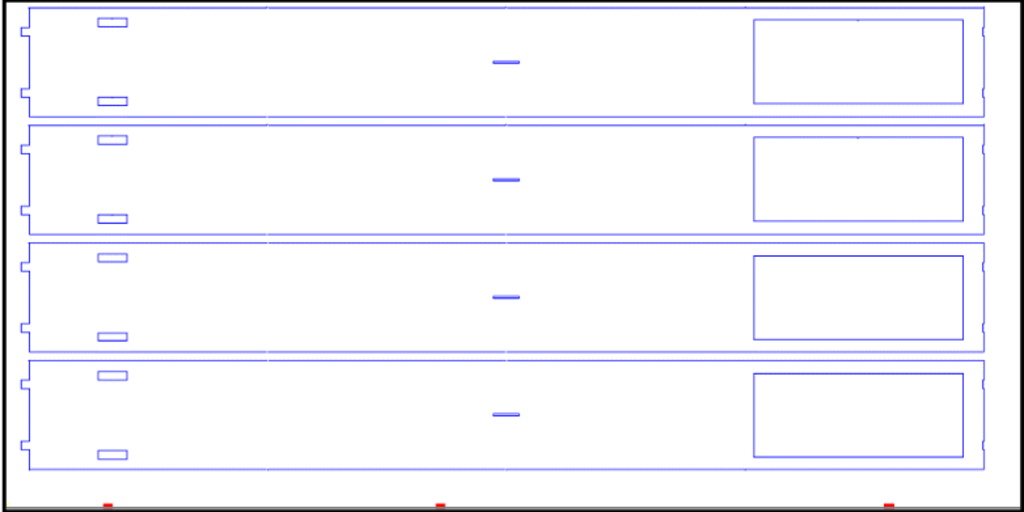
Material / Thickness: SPCC / 1.6 mm
Part Size: X 2,305 mm × Y 260 mm
Number of Parts per Sheet: 4
Deburring Areas: Internal cutouts (7.6 m), Outer perimeter (20.7 m)
RELATION
Related Page
CONTACT
For customers considering improvements
to their production processes,
please contact Muratec.
If you have any questions, please contact us here