What Is Chatter in Machining?
Causes, Types, and
Practical Solutions
Index[非表示]
- 1.What Is Chatter in Machining?
- 2.Types of Chatter
- 3.Common Causes of Chatter
- 3.1.Low Stiffness
- 3.2.Improper Cutting Conditions
- 3.3.Poor Machine Condition
- 3.4.Inadequate Workholding
- 4.Effects of Chatter
- 4.1.Poor Surface Finish
- 4.2.Tool Wear and Damage
- 4.3.Reduced Machining Accuracy
- 4.4.Noise and Machine Stress
- 5.Chatter in CNC Turning
- 6.How to Reduce Chatter
- 6.1.Increase System Stiffness
- 6.2.Optimize Cutting Conditions
- 6.3.Improve Tool Selection
- 6.4.Check Machine Condition
- 7.Relationship with Machining Parameters
- 7.1.Cutting Speed
- 7.2.Feed Rate
- 7.3.Depth of Cut
- 8.Practical Tips
- 9.Summary
Introduction
Chatter in machining is a type of vibration that occurs during cutting operations, significantly affecting surface finish, tool life, and machining stability.
In CNC turning and other machining processes, chatter is one of the most common and challenging problems. It can lead to poor surface quality, dimensional errors, and even tool or machine damage.
Understanding chatter is essential for:
- Improving machining stability
- Enhancing surface finish quality
- Extending tool life
What Is Chatter in Machining?
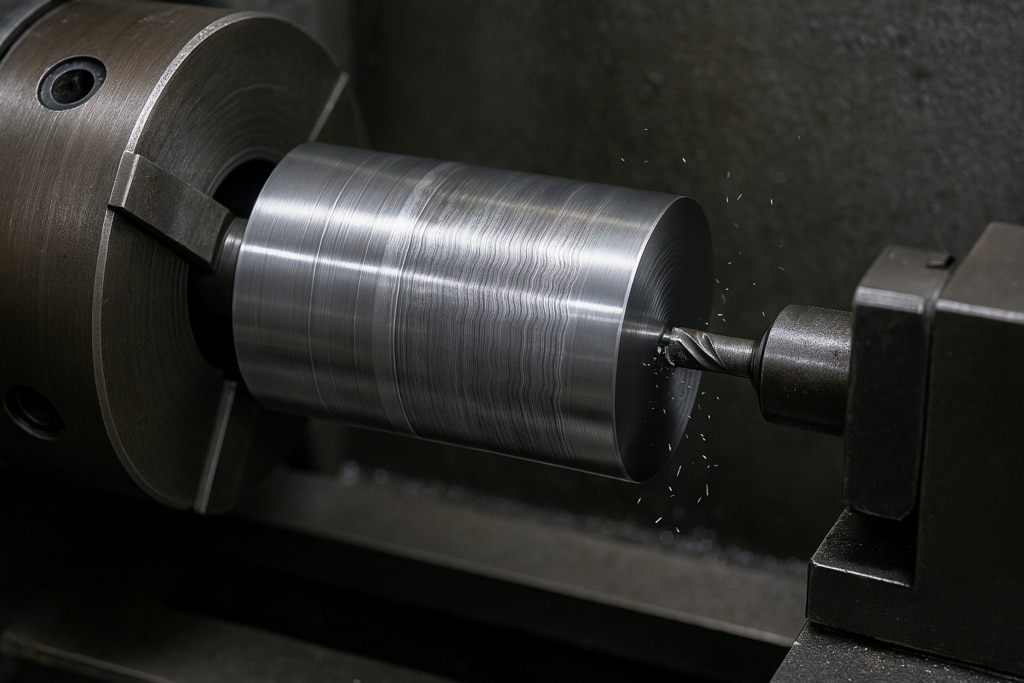
Chatter is a self-excited vibration that occurs between the cutting tool and the workpiece during machining.
Unlike normal vibration, chatter is unstable and can grow rapidly, causing:
- Irregular surface patterns
- Loud noise during cutting
- Increased tool wear
Types of Chatter
Regenerative Chatter
- Caused by vibrations from previous cutting passes
- Creates repeating surface patterns
💡Most common type in CNC turning
Forced Chatter
- Caused by external factors
- Examples: machine imbalance or spindle defects
Mode Coupling Chatter
- Occurs due to interaction between different vibration modes
💡 Identifying the type helps determine the correct solution.
Common Causes of Chatter
Low Stiffness
- Flexible tools or workpieces
- Long tool overhang
Improper Cutting Conditions
- Incorrect cutting speed
- Excessive feed rate or depth of cut
Poor Machine Condition
- Worn spindle or bearings
- Loose components
Inadequate Workholding
- Weak chucking
- Poor clamping stability
💡 Chatter is usually caused by a combination of these factors.
Related :Stiffness / Lathe Chuck
Effects of Chatter
Poor Surface Finish
- Visible wave patterns on the surface
- Reduced quality
Tool Wear and Damage
- Rapid tool wear
- Risk of tool breakage
Reduced Machining Accuracy
- Dimensional deviations
- Increased tolerance errors
Noise and Machine Stress
- High noise levels
- Increased load on machinery
💡 Chatter negatively impacts both quality and productivity.
Related :Roundness (Circularity)
Chatter in CNC Turning
In CNC turning, chatter is especially critical because:
- Continuous cutting amplifies vibration
- Workpieces often have long overhangs
- Rigidity is a key challenge
💡 Proper setup and parameter control are essential.
Related :Long Workpiece Turning
How to Reduce Chatter
Increase System Stiffness
- Reduce tool overhang
- Use rigid tool holders
- Improve workpiece support
Optimize Cutting Conditions
- Adjust cutting speed
- Modify feed rate and depth of cut
Improve Tool Selection
- Use appropriate inserts
- Choose tools with good chip-breaking capability
Check Machine Condition
- Maintain spindle and bearings
- Tighten loose components
💡 Small adjustments can significantly reduce vibration.
Relationship with Machining Parameters
Chatter is strongly related to:
Cutting Speed
- Certain speeds can trigger resonance
Feed Rate
- High feed increases cutting force
Depth of Cut
- Larger depth increases load
💡 Proper parameter balance is essential.
Related :Cutting Speed / Feed Rate in Turning
Practical Tips
- Listen to machining sound changes
- Observe surface patterns
- Adjust parameters gradually
- Use trial cuts for optimization
💡 Early detection helps prevent serious problems.
Summary
Chatter is a critical issue in machining that affects surface quality, tool life, and overall stability.
By understanding its causes and applying proper solutions, manufacturers can achieve:
- Stable machining
- Improved surface finish
- Increased productivity
Controlling chatter is essential for successful CNC turning and high-quality manufacturing.
Featured Articles
CONTACT
If you are considering automated production,
please contact Muratec.
If you have any questions, please contact us here