What Is a Lathe Chuck?
A Complete Guide to Types,
Jaw Options, Selection,
and Maintenance
Index[非表示]
- 1.What Is a Lathe Chuck?
- 2.Types of Lathe Chucks
- 2.1.Three-Jaw Chuck
- 2.2.Four-Jaw Chuck
- 2.3.Collet Chuck
- 2.4.Power Chuck
- 3.Types of Chuck Jaws
- 3.1.Hard Jaws
- 3.2.Soft Jaws
- 3.3.Top Jaws (Replaceable Jaws)
- 4.How a Lathe Chuck Works
- 5.Importance of Proper Chuck Selection
- 6.Lathe Chuck in CNC Turning
- 7.Common Problems and Solutions
- 8.Maintenance of a Lathe Chuck
- 9.Best Practices
- 10.Summary
- 10.1.Featured Articles
Introduction
A lathe chuck is a critical workholding device used in CNC turning and lathe machining to securely hold and rotate the workpiece.
Proper chuck selection and setup directly affect:
- Machining accuracy
- Safety
- Productivity
In CNC turning processes, the chuck plays a key role in ensuring stable cutting conditions and consistent part quality.
What Is a Lathe Chuck?
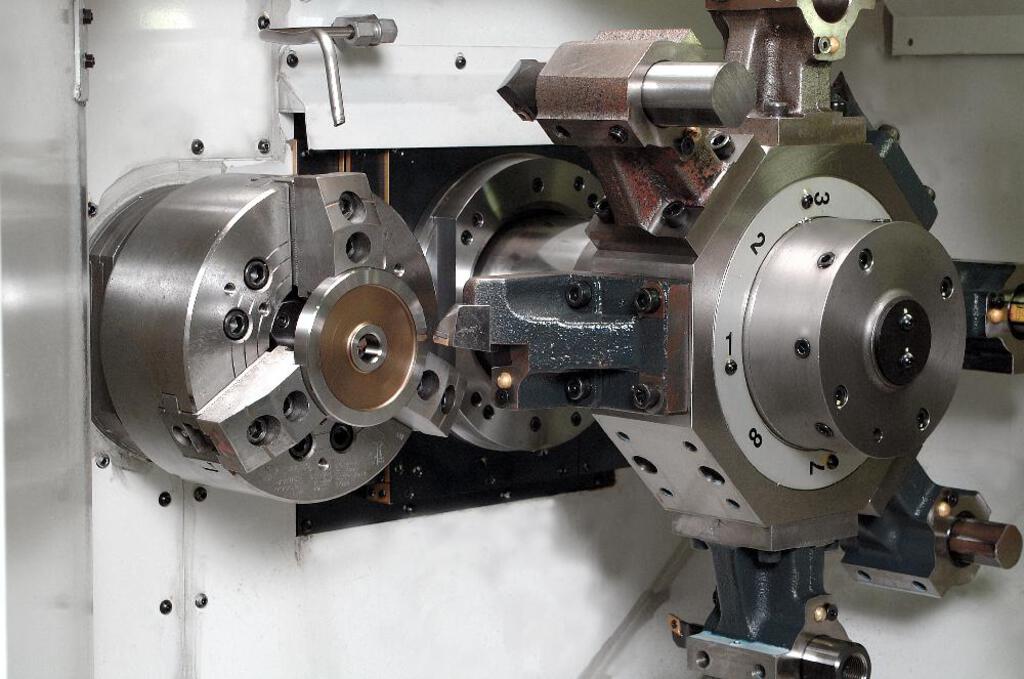
A lathe chuck is a mechanical device mounted on the spindle of a lathe or CNC turning machine to clamp and hold a workpiece during machining.
It allows the workpiece to rotate at high speed while ensuring:
- Secure gripping
- Accurate positioning
- Stable machining
Lathe chucks are essential for turning operations and are widely used in various machining applications.
Related Articles:Turning / NC Turning Machine
Types of Lathe Chucks
Three-Jaw Chuck
- Self-centering mechanism
- Quick setup
- Suitable for general machining
💡 Most common type used in CNC turning
Four-Jaw Chuck
- Independent jaw movement
- Allows precise adjustment
💡 Ideal for irregular shapes or off-center setups
Collet Chuck
- High precision
- Strong gripping force for small parts
💡 Used in high-accuracy and small-diameter machining
Power Chuck
- Hydraulically or pneumatically operated
- Fast clamping and unclamping
💡 Suitable for automated and high-volume production
Types of Chuck Jaws
Hard Jaws
- Durable and wear-resistant
- Used for rough machining
Soft Jaws
- Custom-machined for specific workpieces
- Improved accuracy and repeatability
Top Jaws (Replaceable Jaws)
- Replaceable contact surface
- Flexible for different workpieces
💡 Proper jaw selection improves clamping stability and machining precision.
Related:Fit Tolerances / Roundness (Circularity)
How a Lathe Chuck Works
- The chuck is mounted on the spindle
- Jaws clamp the workpiece
- The spindle rotates the part
The chuck must maintain strong gripping force while minimizing runout and vibration.
Related:Drill Runout
Importance of Proper Chuck Selection
Workpiece Geometry
- Round parts → standard chucks
- Irregular shapes → independent chucks
Required Accuracy
- High precision → collet or soft jaws
- General machining → 3-jaw chuck
Production Volume
- High volume → power chuck
- Low volume → manual chuck
💡 Selecting the right chuck ensures stable and efficient machining.
Related:Turning Center / Bar Machine
Lathe Chuck in CNC Turning
In CNC turning, the chuck directly influences:
- Runout accuracy
- Workpiece stability
- Vibration (chatter)
Improper chucking can cause:
- Dimensional errors
- Poor surface finish
- Tool wear
Related:Internal Turning (Boring) / General Tolerances
Common Problems and Solutions
Runout (Off-Center Rotation)
Causes:
- Worn jaws
- Improper setup
Solutions:
- Re-machine soft jaws
- Check alignment
Slippage
Causes:
- Insufficient clamping force
- Surface contamination
Solutions:
- Increase clamping pressure
- Clean contact surfaces
Vibration and Chatter
Causes:
- Poor clamping rigidity
- Incorrect jaw selection
Solutions:
- Improve chuck condition
- Optimize setup
Related:Chatter in Machining / Stiffness
Maintenance of a Lathe Chuck
- Clean regularly
- Lubricate moving parts
- Inspect jaws for wear
- Check clamping force
💡 Proper maintenance ensures long-term performance and safety.
Related :Coolant in Machining
Best Practices
- Select the correct chuck type
- Use appropriate jaw material
- Ensure proper centering
- Monitor wear and alignment
💡 Stable work holding is essential for high-quality machining.
Summary
A lathe chuck is a fundamental component in CNC turning that ensures secure and accurate workpiece holding.
By selecting the appropriate chuck type, jaw configuration, and maintaining proper setup, manufacturers can achieve:
- Improved machining accuracy
- Reduced vibration
- Higher productivity
Featured Articles
CONTACT
If you are considering automated production,
please contact Muratec.
If you have any questions, please contact us here