What Is Turning?
A Complete Guide to Lathe Machining,
Types, and Processes
Index[非表示]
- 1.What Is Turning? A Complete Guide to Lathe Machining, Types, and Processes
- 2.What Is Turning?
- 3.How Turning Works
- 4.Types of Turning Operations
- 4.1.External Turning
- 4.2.Internal Turning (Boring)
- 4.3.Facing
- 4.4.Thread Turning
- 4.5.Grooving
- 5.CNC Turning vs. Conventional Turning
- 5.1.Conventional Turning
- 5.2.CNC Turning
- 6.Key Cutting Parameters in Turning
- 6.1.Cutting Speed
- 6.2.Feed Rate
- 6.3.Depth of Cut
- 7.Common Issues in Turning
- 7.1.Chatter (Vibration)
- 7.2.Tool Wear
- 7.3.Deflection
- 8.Role of Coolant in Turning
- 9.Automation in Turning
- 9.1.Bar Feeders
- 9.2.CNC Integration
- 10.Applications of Turning
- 11.Summary
- 11.1.Featured Articles
What Is Turning?
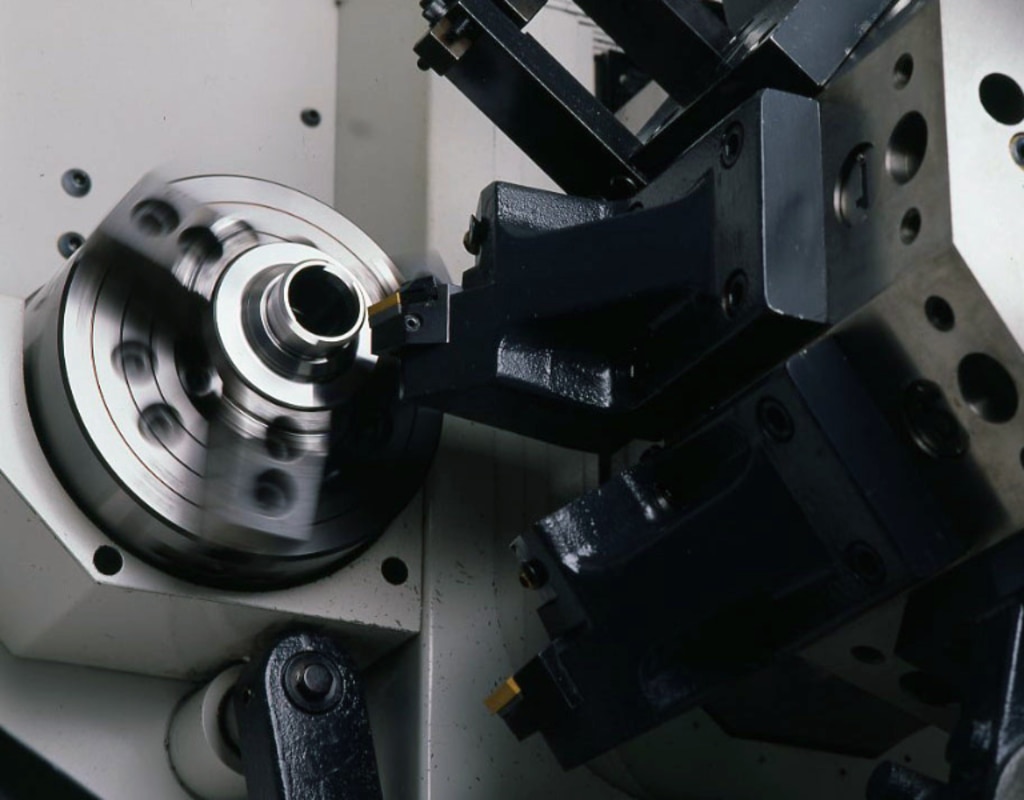
Turning is a machining process used to remove material from a rotating workpiece using a cutting tool.
It is one of the most fundamental operations in metal processing and is commonly performed in CNC turning environments. The workpiece rotates while a stationary cutting tool moves along it to create precise shapes, typically cylindrical components.
Turning is widely used in industries such as:
- Automotive
- Aerospace
- Medical manufacturing
Key benefits include:
- High precision
- Efficient material removal
- Repeatable results
How Turning Works
In turning operations:
- The workpiece is clamped in a chuck or between centers
- The spindle rotates the material
- A cutting tool advances along the surface
This process removes material layer by layer, allowing the creation of:
- Cylindrical shapes
- Conical surfaces
- Threads
- Grooves
Types of Turning Operations
External Turning
- Machining the outer surface of a workpiece
- Most common turning operation
Internal Turning (Boring)
- Machining inside a hole
- Used for precision holes and cylinders
See also: Internal Turning (Boring)
Facing
- Creates a flat surface at the end of a workpiece
Thread Turning
- Produces threads using controlled tool movement
Grooving
- Cuts narrow channels into the material
CNC Turning vs. Conventional Turning
Conventional Turning
- Operated manually
- Flexible for small-batch production
CNC Turning
- Controlled by computer programs
- High accuracy and repeatability
CNC turning (typically performed on CNC lathes) enables:
- Complex geometries
- High-speed machining
- Automated production
Key Cutting Parameters in Turning
Turning performance depends strongly on cutting conditions.
Cutting Speed
- Determines tool-workpiece interaction speed
- Affects heat and tool wear
Related: Cutting Speed
Feed Rate
- Controls how fast the tool moves
- Affects surface finish and productivity
Related: Feed Rate
Depth of Cut
- Determines how much material is removed per pass
- Impacts cutting force and efficiency
Common Issues in Turning
Chatter (Vibration)
- Causes poor surface finish
- Reduces tool life
Related: Chatter in Machining
Tool Wear
- Caused by heat and friction
- Requires proper tool selection and coolant
Deflection
- Occurs in long or thin workpieces
- Leads to dimensional errors
Related: Long Workpiece Turning
Role of Coolant in Turning
Coolant is essential for:
- Reducing heat
- Improving lubrication
- Removing chips
Proper coolant use leads to:
- Better surface finish
- Increased tool life
Related: Coolant in Machining
Automation in Turning
Modern turning processes often include automation systems such as:
Bar Feeders
- Automatically supply material
- Enable continuous production
Related: Bar Feeder
CNC Integration
- Automated tool movement
- Reduced human intervention
Applications of Turning
Turning is used to manufacture:
- Shafts
- Bushings
- Fasteners
- Precision mechanical parts
These components are essential in many industrial systems.
Summary
Turning is a core machining process used to create precise cylindrical components efficiently.
By optimizing:
- Cutting parameters
- Tool selection
- Coolant usage
and integrating automation such as CNC turning systems and bar feeders, manufacturers can achieve:
- High precision
- Improved productivity
- Stable machining quality
Featured Articles
CONTACT
If you are considering automated production,
please contact Muratec.
If you have any questions, please contact us here